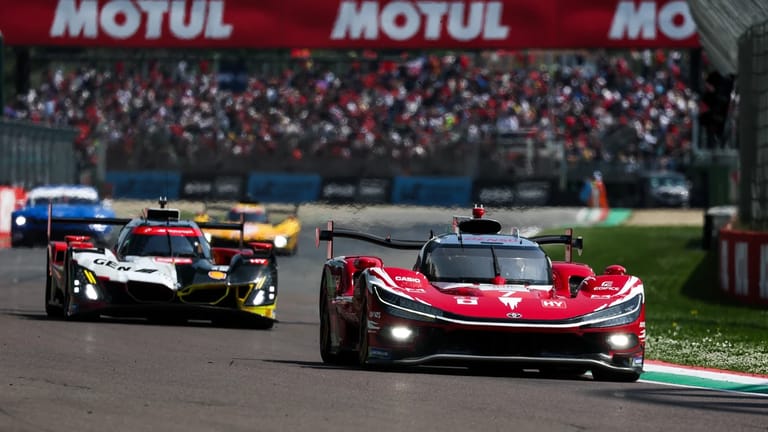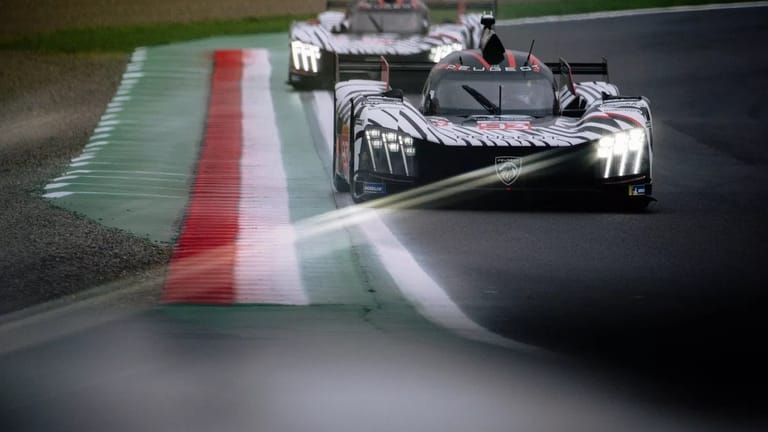
The FIA and ACO use Balance of Performance, or BoP, to keep competition close between cars that are built to very different designs. It is the single most debated regulation in endurance racing, and one of the least understood.
BoP adjusts car performance through changes to weight, power, and in some cases aerodynamics and fuel capacity. The goal is straightforward: make sure a Toyota, a Ferrari, a Porsche, a Cadillac, and every other Hypercar on the grid can compete on roughly equal terms, despite being engineered in fundamentally different ways.
Every manufacturer on the WEC grid agreed to BoP as a condition of entry. Without it, the series could not support the variety of cars it does. The trade-off is that no manufacturer can simply out-develop the field and dominate on raw engineering alone.
Why WEC needs Balance of Performance
The Hypercar class allows two entirely different types of car to race together.
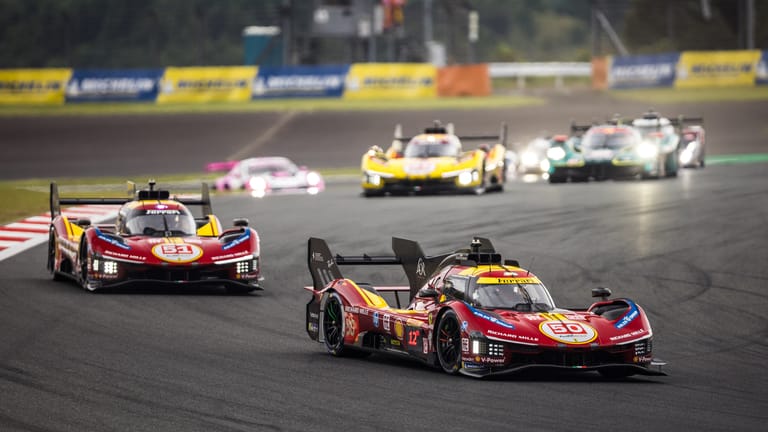
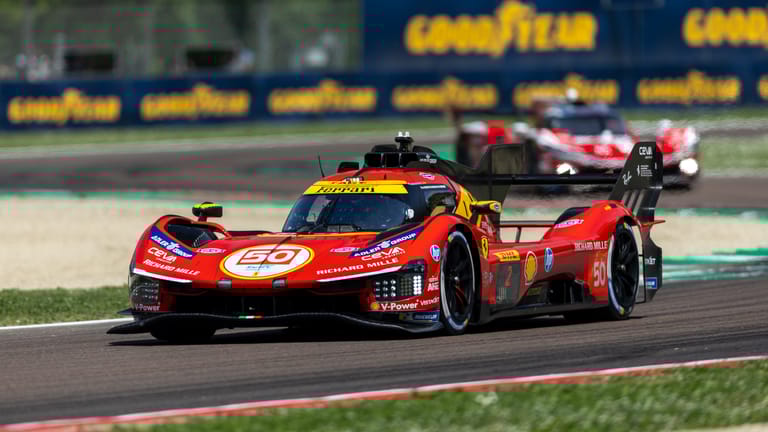
Le Mans Hypercar (LMH) regulations give manufacturers significant freedom. They can choose their own chassis design, engine layout, and hybrid system. Toyota's GR010, Ferrari's 499P, and Peugeot's 9X8 are all LMH cars, and they look and work quite differently from one another.
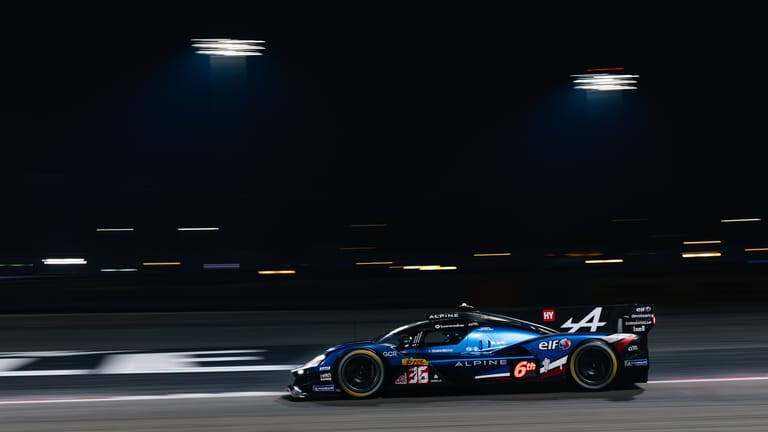
Le Mans Daytona hybrid (LMDh) regulations take the opposite approach. Teams buy a spec chassis from one of four approved suppliers and fit their own engine and bodywork. Porsche, Cadillac, BMW, Lamborghini, and Alpine all run LMDh cars.
These two rulesets produce cars with different strengths. An LMH car might generate more downforce but weigh more. An LMDh car might be lighter but produce less peak power. Without BoP, one platform would almost certainly have a structural advantage, and the other would struggle to compete.
BoP exists to close that gap so the result is decided by driving, strategy, and race execution, not by which rulebook a manufacturer chose.
How the BoP process works step by step
The FIA and ACO build the BoP in three stages, each one more granular than the last.
Step one: homologation parameters. Before a car ever races, it goes through homologation. This is a detailed technical inspection where the FIA measures the car's aerodynamic properties, weight, centre of gravity, and drivetrain characteristics. Much of this happens in a wind tunnel. The data from homologation forms the baseline for BoP. The aerodynamic performance window for Hypercar homologation is deliberately narrow, so cars are already relatively close before any adjustments are made.
Step two: platform equivalence. This step addresses the structural differences between LMH and LMDh. The FIA compares the best-performing car from each platform and adjusts so that neither ruleset has an inherent advantage. This is applied across all cars of each type, not individually.
Step three: manufacturer compensation. Once cars have raced, the FIA and ACO collect performance data from sensors fitted to every car. Lap times, stint averages, top speeds, and tyre degradation all feed into the picture. If a specific manufacturer's car is consistently faster or slower than the target, individual adjustments to weight and power can be made. These are applied carefully and only when the data is considered robust enough, which typically takes several races.
What BoP adjusts on the car
The primary tools are weight and power. A car that is too fast might gain weight or lose power. A car that is too slow might have weight removed or power added.
Beyond those two, the FIA can adjust power delivery at different speeds. This was introduced as "power differentiation" and allows the FIA to modulate engine output above 250 km/h. The purpose is to balance top speeds on long straights without needing to make heavy-handed changes to overall weight or power.
Fuel capacity and aerodynamic elements can also be adjusted, though these are used less frequently.
The homologation parameters that sit behind all these adjustments, things like exact drag and downforce numbers, are not public. This is a deliberate choice by the FIA. Without that context, the weight and power figures on a BoP table do not tell the full story. A car listed as 20kg heavier than another might still be faster because of an aerodynamic advantage that is not visible in the published numbers.
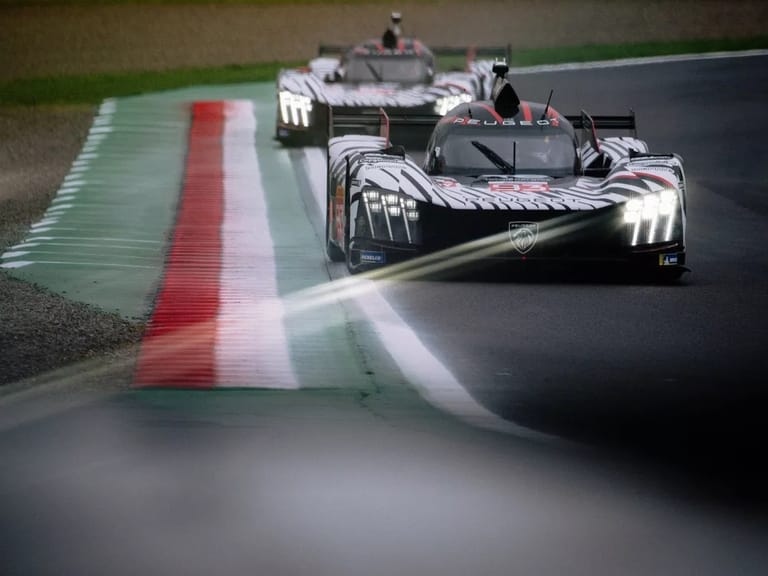
Photo by: FIA WEC / DPPI
How BoP changed for the 2025 and 2026 seasons
The BoP methodology has evolved significantly since the Hypercar era began in 2021.
For the 2025 season, the FIA and ACO introduced a revised approach that targeted what they called "100 percent convergence." Previously, the aim was to keep all manufacturers inside a performance window of roughly 0.3 to 0.4 percent. The new target is to close the gap entirely, at least in theory.
The data inputs also changed. The system now considers two metrics: the ten best laps from each car, and 60 percent of a car's best laps. The first captures peak performance. The second captures performance over a full stint, including tyre degradation. Previously, only the top 20 percent of laps were used, which meant tyre wear differences were invisible to the BoP system.
Top speeds from clean laps, meaning those without the benefit of a slipstream from another car, are now factored in.
BoP is calculated on a three-race rolling average, using data from the three most recent WEC rounds. Le Mans is excluded from this average because its unique circuit characteristics require a standalone BoP.
For new cars entering the series with no race data, the BoP is initially set to match the fastest car on the grid. As the new car accumulates its own data over several races, the BoP transitions to reflect its actual performance.
From 2026, the FIA and ACO stopped publishing BoP tables entirely. Teams still receive their own figures, but the public no longer sees them. BoP is also now set per event rather than across the season. With only eight rounds on very different circuits, a fixed baseline was considered impractical.
How Balance of Performance works at Le Mans
Le Mans has always been treated differently for BoP purposes.
The 24 Hours runs on the 13.6km Circuit de la Sarthe, which includes long public-road straights and characteristics found nowhere else on the WEC calendar. A BoP that works at Spa or Fuji does not necessarily translate to Le Mans.
The Le Mans BoP uses simulation data and historical race data from the previous year's 24 Hours, rather than drawing directly from the season's earlier rounds. This separation is intentional. The organisers want to prevent manufacturers from managing their pace at earlier events in order to secure a more favourable BoP for the race that matters most.
This concern is not theoretical. Sandbagging, the practice of deliberately underperforming to influence future BoP adjustments, has been a recurring issue in endurance racing for years.
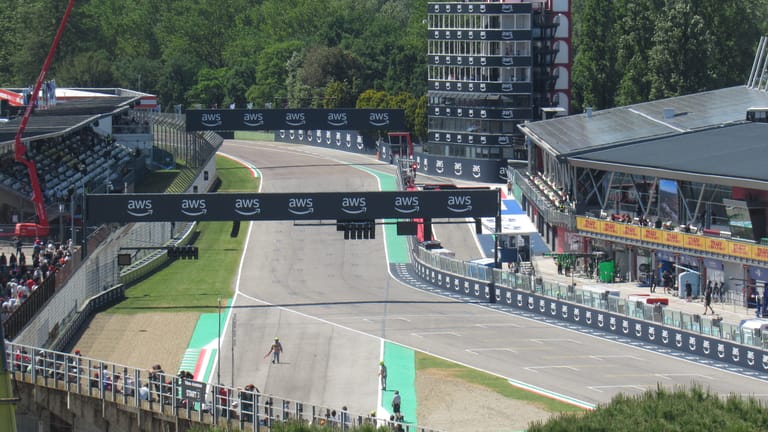
In 2026, the secrecy around BoP was extended to Le Mans specifically. The FIA chose not to reveal Le Mans BoP details in advance, with the stated goal of limiting how much manufacturers could game the system based on the first two rounds at Imola and Spa.
What is sandbagging and why does BoP encourage it
Sandbagging is when a manufacturer or team deliberately holds back performance during a race or test session to appear slower than they really are. If the BoP system sees a car as slow, it may receive a more favourable adjustment, such as less weight or more power, for later rounds.
The incentive is strongest when the data from early-season races feeds directly into the BoP for a high-profile event like Le Mans. A team that runs at 98 percent at Imola and Spa could, in theory, arrive at Le Mans with a BoP advantage over rivals who pushed harder.
Organisers have tried several approaches to combat this. The three-race rolling average dilutes the impact of any single underperformance. The standalone Le Mans BoP reduces the link between sprint rounds and the 24 Hours. And in 2026, hiding the BoP tables removes some of the information manufacturers would need to calculate exactly how much pace to hold back.
IMSA, which runs the same Hypercar-class cars in its GTP category, has taken a different approach. It still publishes its BoP tables but has introduced rules prohibiting manufacturers, teams, and drivers from making public comments about the BoP process or its outcomes.
How BoP works in the LMGT3 class
The LMGT3 class, which replaced LM GTE in 2024, uses a similar BoP structure but with some differences.
All LMGT3 cars are built to the same GT3 technical regulations, so there is no need for platform equivalence. The BoP process starts at homologation and then moves directly to manufacturer compensation based on race data.
SRO, the organisation that manages GT3 homologation globally, holds dedicated BoP tests at Circuit Paul Ricard twice a year. Cars are fitted with standardised telemetry equipment, and professional drivers run them through a controlled programme. The data from these tests forms the foundation of BoP for GT3 cars across all series, including WEC.
In WEC, a weight handicap based on championship standings is also applied at each round except Le Mans. This adds another layer of performance balancing on top of the standard BoP adjustments.
The calculation for LMGT3 considers 60 percent of each car's best laps, which means that lap times from Silver-rated and Bronze-rated amateur drivers influence the numbers. This is different from Hypercar, where the ten absolute best laps are also factored in.
BoP vs EoT: what is the difference
Before the Hypercar era, the top class in WEC was LMP1, and the system used there was called Equivalence of Technology, or EoT. The two concepts are related but not identical.
EoT was designed to allow hybrid and non-hybrid prototypes to race in the same class. The adjustments focused on energy allocation and fuel consumption rather than weight and power. A hybrid car like Toyota's TS050 was given less fuel per stint and less total energy per lap than its non-hybrid competitors, offsetting the efficiency advantage of its electric motor.
BoP is broader. It addresses all performance-relevant parameters, weight, power, aerodynamics, fuel, and applies to cars that may differ in engine layout, drivetrain type, chassis design, and platform regulations. The shift from EoT to BoP reflected the shift from LMP1 to Hypercar, where the cars competing are more diverse in their fundamental design.
Why BoP is controversial
BoP will always generate debate because it creates a tension at the heart of motorsport. Racing is supposed to reward engineering excellence, but BoP deliberately limits the advantage that superior engineering can deliver.
Manufacturers who have invested heavily in developing a faster car can find themselves penalised for their own success. This is the objection raised by figures like Toto Wolff, who has cited BoP as a reason Mercedes has not entered the Hypercar class.
On the other side, BoP is what makes the current grid possible. Fifteen manufacturers competed in WEC in 2025. That depth of competition would not exist without a system that keeps the field close. No manufacturer would commit hundreds of millions to a programme knowing that a rival's car was structurally unbeatable.
The compromise is imperfect. Sometimes the BoP gets it wrong and one car arrives at a race with a clear advantage. Sometimes manufacturers feel they have been treated unfairly. But the alternative, a series where only two or three cars can win, would be worse for everyone, including the manufacturers themselves.
The system works best when it is invisible. When the racing is close and the results varied, nobody talks about BoP. When one manufacturer dominates or a surprise result raises eyebrows, BoP becomes the first explanation people reach for, whether or not it is the right one.