Thirty-five cars, eight manufacturers, one question
Who beats Ferrari?
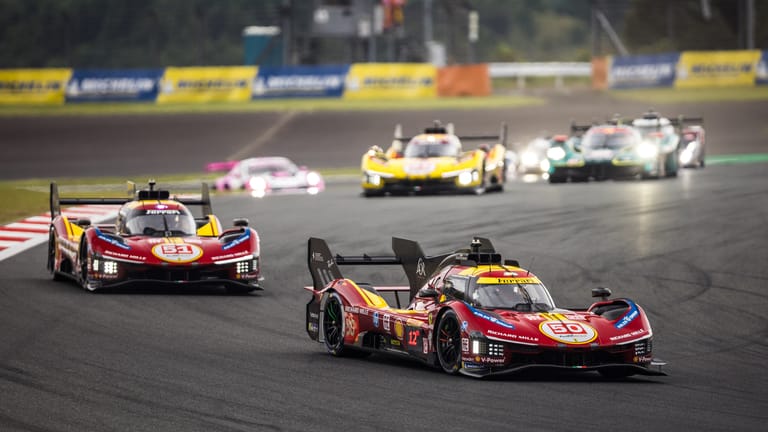
That's the headline question as the 2026 FIA World Endurance Championship prepares to get underway at Lusail International Circuit on 28 March, a month later than usual. The Qatar 1812km kicks off an eight-round season that will visit five continents and, as always, reach its crescendo at Le Mans in June. Ferrari has swept every title going for three consecutive seasons with the 499P, and the car remains unbeaten at the Circuit de la Sarthe. Everyone is chasing them.
The Hypercar grid for 2026 lines up with 17 cars across eight factory programmes, joined by a single privately entered Ferrari. It is slightly leaner than last year's 18-car field, but arguably more competitive. The racing in 2025 was spectacular: seven different winning crews from eight races. There is no reason to think 2026 will be any less chaotic.
The big arrivals and departures
The most significant newcomer is Genesis Magma Racing, the premium arm of South Korean giant Hyundai, which arrives with two GMR-001 LMDh prototypes built on the same Oreca chassis that underpins the Alpine A424. The driver pairings carry serious credentials. André Lotterer and Pipo Derani anchor the #17 car alongside rookie Mathys Jaubert, while Mathieu Jaminet, Paul-Loup Chatin and Daniel Juncadella share the #19. As a first WEC season goes, that's a strong roster to build around.
The notable absence is Porsche. Both the works Porsche Penske Motorsport programme and the privateer Proton Competition entry have gone, leaving the iconic German brand with no Hypercar presence whatsoever for the first time in years. Proton simply couldn't fund the expansion to two cars required under WEC's manufacturer eligibility rules. Porsche's focus now sits entirely on IMSA GTP, where its 963 remains a force. It's still a loss that stings for WEC.
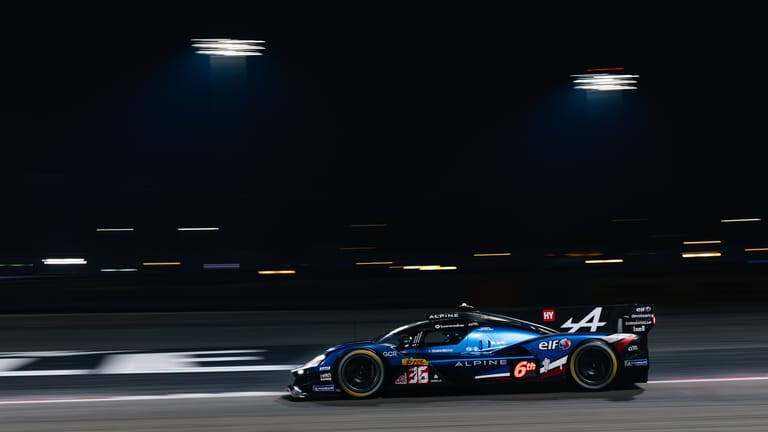
Then there's the elephant in the room. Alpine, as we covered here recently, has already announced it will leave the Hypercar class at the end of this season. The A424 team will compete with that knowledge hanging over them all year. Whether it becomes a distraction or a motivator remains to be seen.
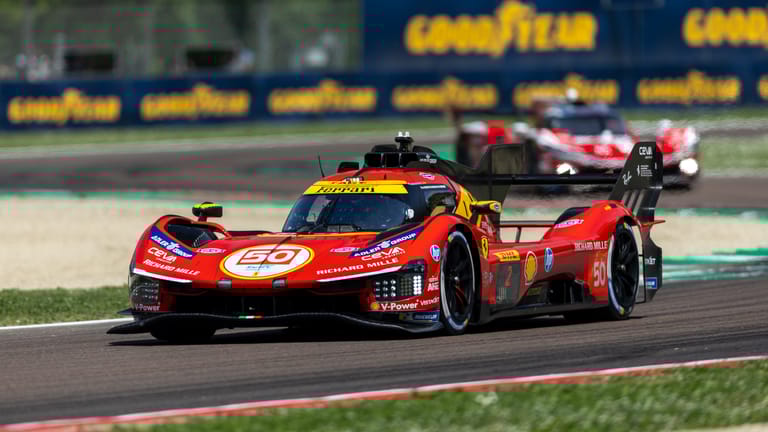
Ferrari returns with the same two factory 499Ps and entirely unchanged driver line-ups. Antonio Fuoco, Miguel Molina and Nicklas Nielsen continue in the #50; Alessandro Pier Guidi, James Calado and Antonio Giovinazzi in the #51. The privately entered AF Corse #83 car, which won Le Mans outright in 2025, is expected to confirm Robert Kubica and Phil Hanson shortly.
Here's what I find genuinely interesting about Ferrari's approach to 2026. They are not deploying additional evo jokers. No major update is coming until 2027. They've made minor aerodynamic refinements and focused on reliability after both works cars hit trouble at Le Mans last year, but that's it. They are betting that what they have is still good enough.
Given their recent record, it's hard to argue.
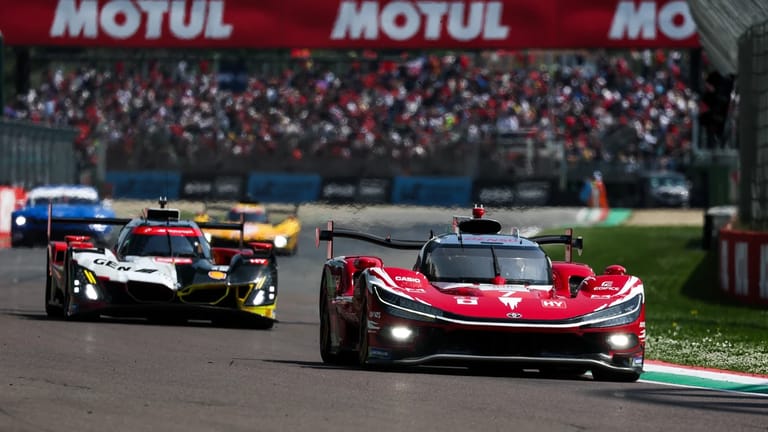
Toyota arrive with what Motorsport.com's reporting describes as the biggest visual change to the GR010 Hybrid in three years, the first major overhaul of a car that has raced since 2021. The entire front end has been redesigned, with new aerodynamic philosophy bringing the LMH closer to Toyota's contemporary road car identity.
This matters. Toyota barely won a race until the Bahrain season finale in 2025, which was a deeply humbling campaign for a programme that had dominated WEC's early Hypercar years. The Japanese team returns to Cologne's engineering brains trust having clearly gone away and done a serious reset. The same three-driver pairings remain: Kamui Kobayashi sharing the #7 with Nyck de Vries and Mike Conway, and Brendon Hartley alongside Sebastien Buemi and Ryo Hirakawa in the #8.
There is genuine potential here. Whether the Balance of Performance allows them to show it is a different conversation.

Photo by: DPPI / WEC
The BoP problem will define the season
Every year in WEC, the Balance of Performance (BoP) is either the championship's greatest equaliser or its most contentious subplot. In 2026 it will be both and more complicated than ever.
Consider what the stewards and ACO will be working with: a brand-new car in Genesis that has no competitive history to reference, the only non-hybrid machine on the grid in the Aston Martin Valkyrie, a team in Peugeot that has exhausted all its permitted development tokens and is in discussions about whether a "significant lack of performance" clause might unlock further changes, and a defending champion in Ferrari that is deliberately holding back its development firepower.
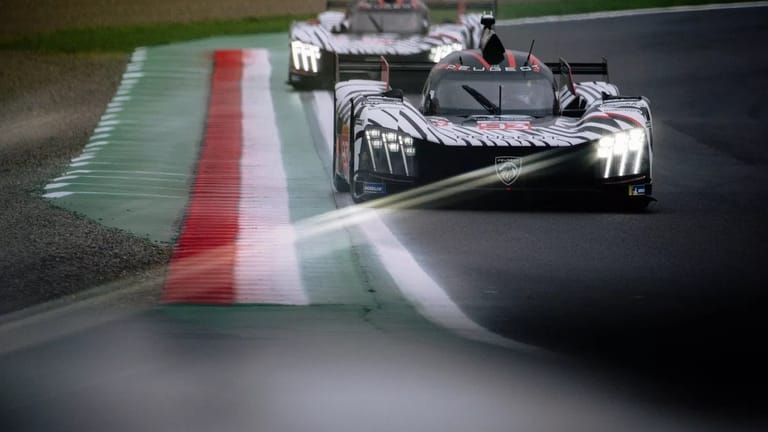
Peugeot's situation deserves specific attention. The 9X8 has been reworked multiple times and the car still struggles. According to reporting from Motorsport.com, Peugeot has used both its evo jokers and its second homologation window, leaving it frozen until at least 2027 unless the rulemakers grant an exception. New arrivals Nick Cassidy and Théo Pourchaire are quality, but they cannot paper over fundamental mechanical limitations.
Cadillac makes a statement
One of the stories I'm most curious to see play out is Cadillac's. The V-Series.R has received what is arguably the most visually dramatic overhaul of any manufacturer heading into 2026: substantially revised aerodynamics front and rear, a new lower-profile rear wing, and a full switch to Brembo braking. After a season in which Cadillac showed consistent pace without regularly converting it into wins, this feels like a team that has genuinely identified its weaknesses and addressed them.
Jack Aitken steps in for the departed Jenson Button in what will be one of the more interesting subplots to watch across the season.
Aston Martin: the wildcard
I keep coming back to the Valkyrie. It is the only non-hybrid Hypercar on the grid, a fact that makes BoP calibration uniquely difficult. The car is road-derived in a way none of its rivals are, and the team chose not to use any evo jokers this winter, believing the performance is already there to be extracted.
Aston Martin's best result in 2025 was a fifth place, but the team has been accumulating data and testing extensively in preparation for a more complete 2026 campaign. If the BoP weight and power settings ever land in the right window for the Valkyrie, this car could be genuinely quick. That if is doing a lot of heavy lifting, though.
The broader context is also significant: Aston Martin's WEC ambitions ultimately point toward a first outright Le Mans victory for the brand since 1959. That's a story the sport needs to be telling.
BMW: the make-or-break season
Reporting from The Race described 2026 as a "make or break" campaign for BMW's WEC programme, and I think that framing is fair. The M Hybrid V8 has been reworked with around 50% of the bodywork revised for 2026, headlined by aerodynamic changes at the front and a reduction of the car's signature kidney grille openings to optimise airflow. The programme has flashed pace at times. It needs to convert that into podiums and wins.
What to watch for in 2026
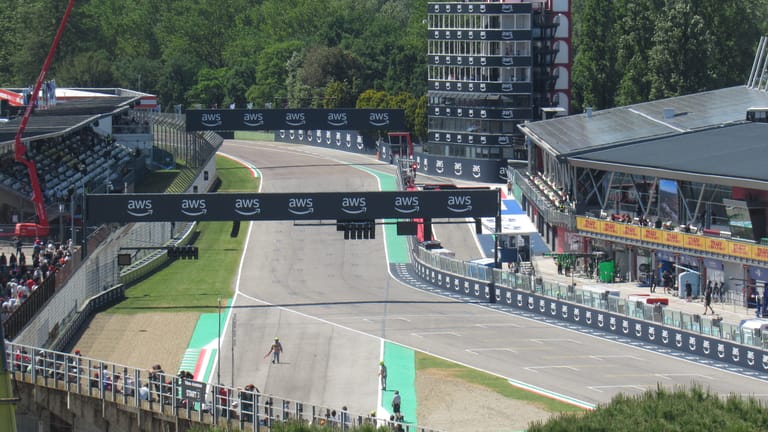
Across eight rounds, from Qatar through Imola, Spa, Le Mans, São Paulo, Austin, Fuji and finally Bahrain, the key storylines are already taking shape.
Can anyone actually dethrone Ferrari, or will the 499P make it four straight titles? Will Toyota's revised GR010 finally deliver on the promise this car showed in its early years? How quickly does Genesis find its feet? Does the Valkyrie ever get a BoP that lets it truly show what it can do? And does Peugeot get any meaningful relief from the regulations, or are they simply serving out the remaining months of a project that has never quite fulfilled its potential?
WEC enters 2026 as a championship in genuine health, with growing attendance, strong manufacturer commitment and the knowledge that Ford and McLaren are knocking on the door for 2027. Qatar in late March cannot come quickly enough.