There is a version of Formula 1 where the fastest car in pre-season testing wins the opener, the order settles, and the season unfolds more or less as predicted. Melbourne rarely delivers that version.
Since the Australian Grand Prix moved to Albert Park in 1996, the circuit has produced an unusual number of results that nobody saw coming. That is not a coincidence. There are structural reasons why this track, at this point in the calendar, scrambles the expected order. And with the most significant regulation overhaul in the sport's history arriving this weekend, those reasons matter more than ever.
The track itself is part of it
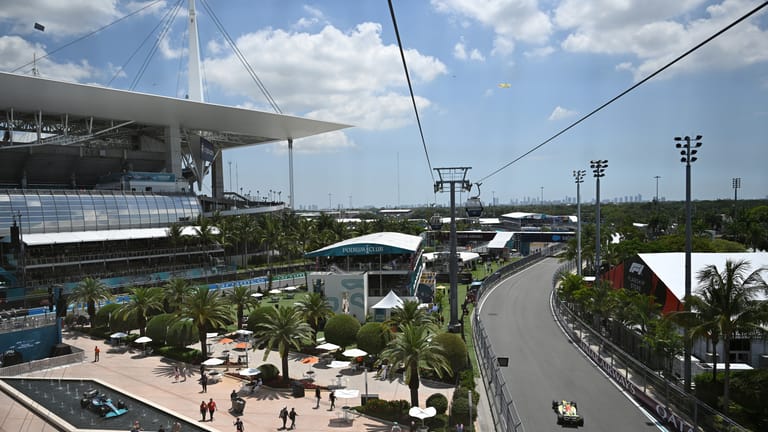
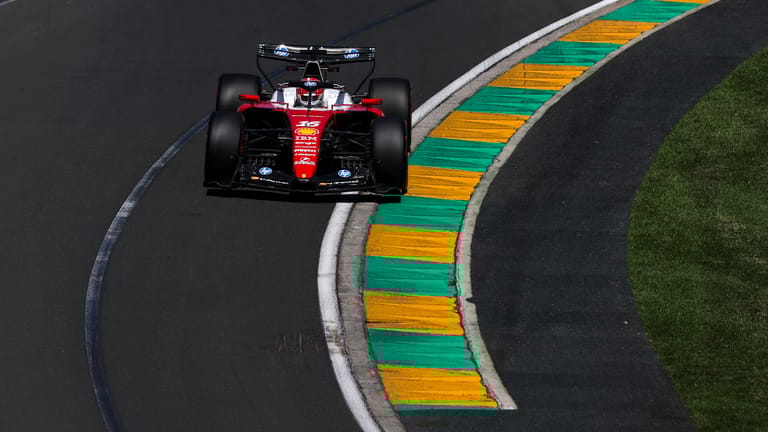
Albert Park spends most of the year as a public park. When the barriers go up and the paddock rolls in, the surface is green, dusty, and slow to build grip. Early practice sessions can look almost processional because nobody is really pushing on a circuit that hasn't seen a racing tyre in twelve months.
That catches teams out. Setup choices made on Friday morning, when the track is at its slippery worst, can look completely wrong by Sunday afternoon. A car that feels planted by qualifying might have been built around conditions that no longer exist.
The circuit is also notably bumpy as a temporary facility, and demands a well-sorted chassis, with several spots where the drivers need a reactive front end to commit to corners. For a brand-new car, still being understood after limited pre-season running, that is a specific and unforgiving ask.
What the history tells us
The pattern started almost immediately. In Melbourne's very first race in 1996, debutant Jacques Villeneuve took pole and led away, only for an oil leak to slow his car and hand victory to team mate Damon Hill, after a race that had already been red-flagged for a startling first-lap accident.
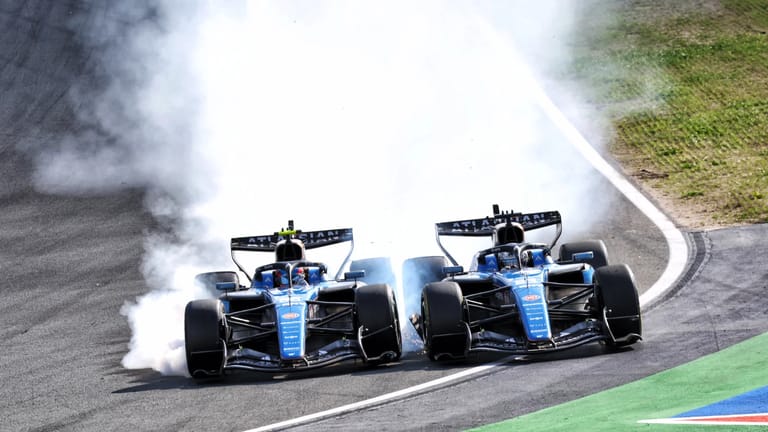
The 2002 race saw a first-corner collision trigger a pile-up that eliminated several cars, before debutant Mark Webber scored an improbable fifth place for Minardi, a team so underfunded they were essentially racing on goodwill and spare parts. Webber and team owner Paul Stoddart held an unofficial podium celebration in front of the crowd. It remains one of the more joyful images in the sport's recent history.
A year later, David Coulthard won from eleventh on the grid. Schumacher's car had been damaged by a loose barge board, Barrichello crashed in the damp early laps, Raikkonen was penalised for a pit lane infringement, and Montoya spun with ten laps to go. Coulthard barely featured in the race narrative until he was suddenly winning it.
Then 2009. Brawn GP had gone through an entire winter of turmoil and uncertainty after Honda's withdrawal, turned up at the opening race, and blew everybody else out of the water. Jenson Button led a Brawn one-two. A team that had nearly not existed, racing a car built around regulations written for a different engine, winning on debut. Melbourne gave them the stage and the chaos to do it.
Even when the result at the front looks tidy, strange things happen further down. In 2014, Daniel Ricciardo stood on the podium at his home race to thunderous applause, only to be disqualified post-race for a fuel flow infringement under F1's last major regulation reset. In 2025, Lando Norris held on for victory through constantly changing conditions while home favourite Oscar Piastri slid off the road and eventually finished ninth.
The lesson Melbourne keeps teaching is the same: certainty is expensive here, and nobody can really afford it.
New regulations make it worse. Or better, depending on your view
Every time F1 has introduced significant rule changes, the opening race has amplified the uncertainty. In 2009 the new aerodynamic rules produced Brawn from nowhere. In 2014 the turbo hybrid era began and multiple drivers retired early while teams were still understanding what they had built.
This year is a different order of magnitude. The 2026 cars are smaller, shorter, and lighter, running a roughly 50-50 split between electrical and combustion power on fully sustainable fuel, with active aerodynamics replacing the old DRS system. Every team has had nine days of pre-season running to understand machinery that is fundamentally unlike anything that has raced before.
For Martin Brundle, who has seen a few regulation changes in his time, this is simply the biggest the sport has ever attempted. Pre-season testing offered hints but no certainties. Mercedes looked strong. Ferrari looked strong. McLaren looked strong. With energy deployment under the new rules being so circuit-specific, Melbourne's particular characteristics could throw up a completely different pecking order to what was seen in Bahrain.
Race starts alone will be different in 2026. Without the MGU-H that previously kept the turbocharger spinning, drivers face genuine turbo lag off the line for the first time in over a decade. Add a green track, cars nobody fully understands yet, and Albert Park's particular talent for disorder, and the first corner on Sunday has the potential to be genuinely unpredictable.
That, in the end, is why Melbourne matters. It is not just the first race. It is the one race on the calendar that consistently refuses to let the sport settle into the order it expects. After thirty years of evidence, it would be brave to bet heavily on the favourite this weekend.
You can read more about what the 2026 era means for the sport's biggest names over in our season preview.