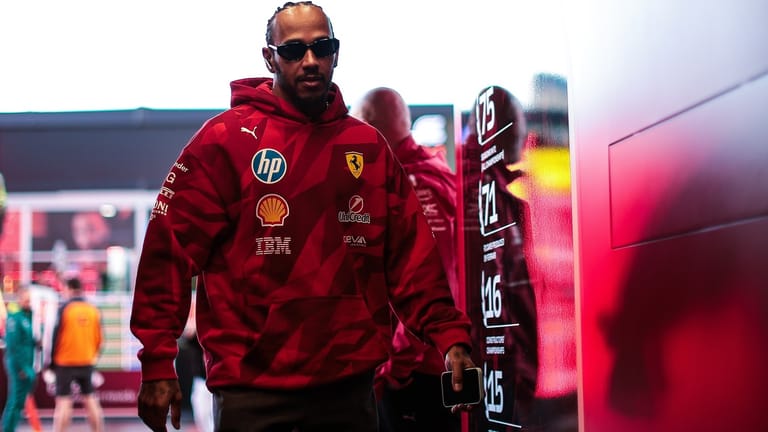
Two of the greatest drivers in Formula 1 history are entering this season on very different terms, but with one thing in common. For Lewis Hamilton at Ferrari and Fernando Alonso at Aston Martin, 2026 is not just another year. It is the season that will most likely decide whether either of them races in 2027.
The contrast between their situations could not be sharper. Hamilton has genuine reason for optimism. Alonso, despite everything that was supposed to make this his renaissance, has almost none.
Hamilton: a reset, and a last real shot
Hamilton's 2025 at Ferrari was wretched by any measure. He finished seventh in the championship, 86 points behind Leclerc, and did not stand on a podium once in 24 races. The previous generation of cars never suited him; he relies on aggressive late braking and strong rear-end grip, and the ground-effect machinery gave him neither. He was visibly struggling, calling himself "useless" after qualifying 12th at the Hungarian Grand Prix while his team-mate took pole.
The winter brought more disruption. Riccardo Adami, his long-time race engineer who had been with him since his Ferrari arrival, was moved sideways into driver academy oversight. A permanent replacement has still not been confirmed. Hamilton described the uncertainty as potentially "detrimental" to his season. It is a strange way to prepare for what may be the most important campaign of his later career.
And yet the signs from testing were genuinely encouraging. Ferrari's SF-26 looked reliable, fast over a race distance, and innovative in ways that suggest the team has genuinely understood the new regulations. The car appears to better suit Hamilton's instincts than anything he drove last year. He posted on Instagram mid-test that he felt "reset and refreshed" and that he was "not going anywhere."
His contract situation remains opaque. Various reports put it as anything from a two-year deal with a personal option for a third year, to a fully guaranteed three-year arrangement through 2027. Ferrari have never publicly clarified it, and Hamilton himself has said discussions about the future normally happen "the year before" the contract expires. That suggests those conversations, whatever shape they take, are still ahead of him.
What is clear is that 2026 will define them. If Ferrari deliver a competitive car and Hamilton is regularly fighting at the front, the case for continuing writes itself. If he finds himself in the same position as last year, being outqualified by Leclerc every other weekend and finishing in the points rather than on the podium, the conversation will shift quickly. Richard Hopkins, a colleague from his McLaren days who has known Hamilton since he was 12, put it plainly: if Hamilton stops believing he has what it takes, that will be the end. But if the car suits him and he is smiling, Hopkins said, "why leave?"
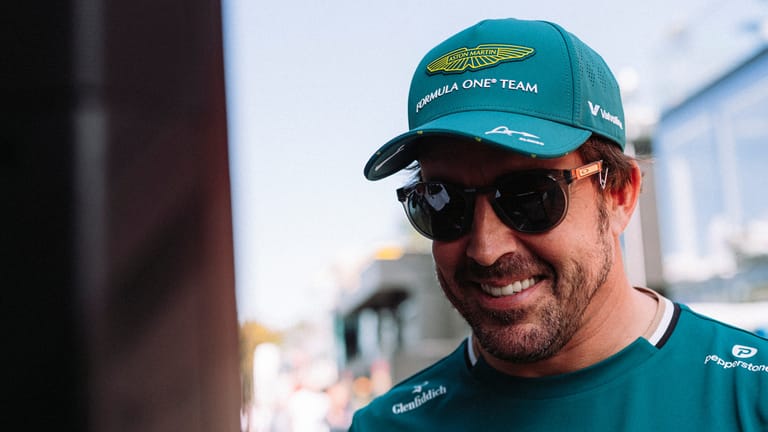
Photo by: Aston Martin
Alonso: the wrong kind of final chapter
Alonso's situation is the more painful of the two. The 2026 season was meant to be his last great roll of the dice. Newey had been recruited. Honda had signed on as works partner. The regulations were reset from scratch. Every piece appeared to be in place for Aston Martin to go from midfield obscurity to genuine title contender, and for Alonso at 44 to finally chase a third world championship.
It has not worked out that way. Testing in Bahrain was a disaster. The team completed just 334 laps across six days on track, fewer than any other team, with Honda's power unit repeatedly failing. On the final day, Lance Stroll managed six laps before the team packed up early and went home. The pitwall sat empty. According to reports, Honda had run out of spare batteries. Adrian Newey himself admitted publicly that the team was "starting on the back foot," having entered the wind tunnel four months later than everyone else.
The paddock consensus is that Aston Martin heads to Melbourne as the slowest, or close to the slowest, team on the grid. Cadillac, a brand-new team completing their first ever season, look to be in better shape.
Spanish journalist Marco Canseco, writing in Marca, was blunt about what this means for Alonso. His view: unless Aston Martin can reach the top of the midfield by mid-season, retirement at year-end is "very likely."
The particular cruelty here is in what Alonso had said before the season. He told reporters that if the car performed well, 2026 would "probably be" his last year. He wanted to go out on a high, compete for a win, maybe challenge for the championship. Now the car is not competitive, the logic flips: he may feel he has to stay another year to finish on his own terms rather than limp out the back door. As Alonso put it himself, he would take it "day by day" and "race by race."
For a man who last won a Grand Prix in 2013, who has been chasing that 33rd victory for over a decade, the thought of closing out his career somewhere near the back of the grid is clearly unacceptable. Something has to change, and quickly, for this story to end the way anyone hoped.
The bigger picture
If both Hamilton and Alonso do leave at the end of 2026, Formula 1 loses something that cannot be replaced quickly. Thirty-five years of combined championship experience, nine world titles won between them, and two careers that have defined the modern era of the sport.
The driver market consequences would be significant. Hamilton's Ferrari seat is the most coveted in the paddock. Oliver Bearman is the obvious internal candidate; the 20-year-old has a close relationship with the Scuderia and has already demonstrated he can perform under pressure. But his arrival would not be a quiet transition. It would mark the formal end of an era.
Alonso's departure would leave Aston Martin in an even more exposed position. The team has spent enormous sums on Newey, on Honda, on building infrastructure at Silverstone. The pitch to future drivers will depend entirely on whether the car can be made competitive. Reports from Spain suggest that neither Russell, Verstappen nor Leclerc are showing any interest in the project in its current state.
There is also the question of what the two of them do next. Reports have emerged linking Alonso and Verstappen in a joint endurance project, possibly Le Mans. Alonso has two Le Mans victories and the race is unfinished business for him in a different way. Verstappen, who has repeatedly said he does not want to follow the Hamilton-Alonso model of racing into his forties, has spoken openly about wanting to spend more time with family and pursue other forms of racing.
None of this is certain. Both drivers are still in the car. Ferrari's testing pace gives Hamilton a genuine platform. Honda has promised reliability improvements from China onwards. There are 24 races ahead.
But for the first time in a long while, the question of life after Hamilton and Alonso is not abstract. It is the 2027 driver market, and it is closer than it looks.