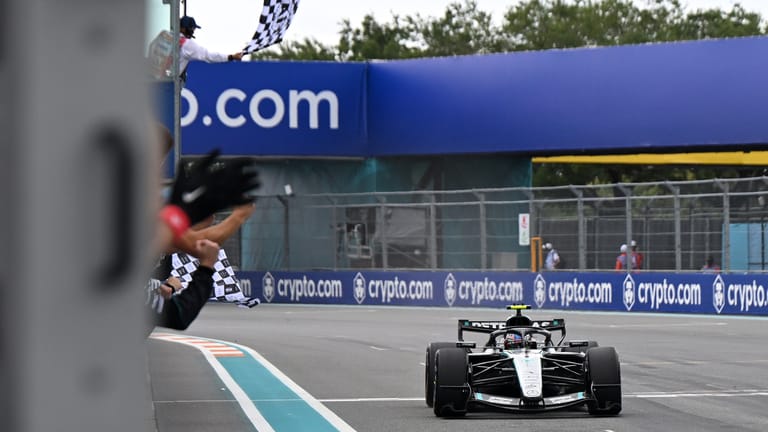
Kimi Antonelli won his third consecutive grand prix in Miami, but the story of the weekend was how hard he had to work for it. McLaren arrived with a major upgrade, Norris led the race, and Mercedes only got the job done through a pitstop undercut that came down to a couple of seconds. Behind them, the rest of the field delivered chaos.
Here are seven things we learned.
2026 Miami Grand Prix race results
|
Pos |
Driver |
Team |
Time / Gap |
|---|---|---|---|
|
1 |
Kimi Antonelli |
Mercedes |
1:33:19.273 |
|
2 |
Lando Norris |
McLaren |
+3.264s |
|
3 |
Oscar Piastri |
McLaren |
+27.092s |
|
4 |
George Russell |
Mercedes |
+43.051s |
|
5 |
Max Verstappen* |
Red Bull |
+48.949s |
|
6 |
Lewis Hamilton |
Ferrari |
+53.753s |
|
7 |
Franco Colapinto |
Alpine |
+61.871s |
|
8 |
Charles Leclerc** |
Ferrari |
+64.245s |
|
9 |
Carlos Sainz |
Williams |
+82.072s |
|
10 |
Alexander Albon |
Williams |
+90.972s |
|
11 |
Oliver Bearman |
Haas |
+1 lap |
|
12 |
Gabriel Bortoleto |
Audi |
+1 lap |
|
13 |
Esteban Ocon |
Haas |
+1 lap |
|
14 |
Arvid Lindblad |
Racing Bulls |
+1 lap |
|
15 |
Fernando Alonso |
Aston Martin |
+1 lap |
|
16 |
Sergio Perez |
Cadillac |
+1 lap |
|
17 |
Lance Stroll |
Aston Martin |
+1 lap |
|
18 |
Valtteri Bottas |
Cadillac |
+2 laps |
|
DNF |
Nico Hulkenberg |
Audi |
Lap 7 |
|
DNF |
Liam Lawson |
Racing Bulls |
Lap 6 |
|
DNF |
Pierre Gasly |
Alpine |
Lap 4 |
|
DNF |
Isack Hadjar |
Red Bull |
Lap 4 |
* Five-second time penalty for crossing pit exit line. ** 20-second time penalty for leaving the track on multiple occasions without justifiable reason.
Why McLaren lost the Miami Grand Prix despite having the faster car
McLaren's upgrade package closed the gap to Mercedes in one hit. Norris proved that by winning Saturday's sprint from pole with Piastri second. He led the grand prix after passing both Leclerc and Antonelli in the opening stint.
The problem was the pitstop window. Mercedes pulled Antonelli in first as soon as rain looked unlikely, the crew delivered a 2.2-second stop, and Antonelli nailed his outlap. Norris came in one lap later. He emerged from the pit exit fractionally ahead, but Antonelli had the warmer tyres and got past on the run to Turn 4. From there, track position decided the race.
Andrea Stella pointed to timing, pit crew speed and the inlap as contributing factors. It was not one thing. It was several small things adding up to three seconds.
Norris was blunt about it afterwards: they should have pitted first. Both teams claimed the other was slightly quicker. When the margins are that small, execution is the tiebreaker, and Mercedes won that contest.
How Antonelli won his third consecutive grand prix
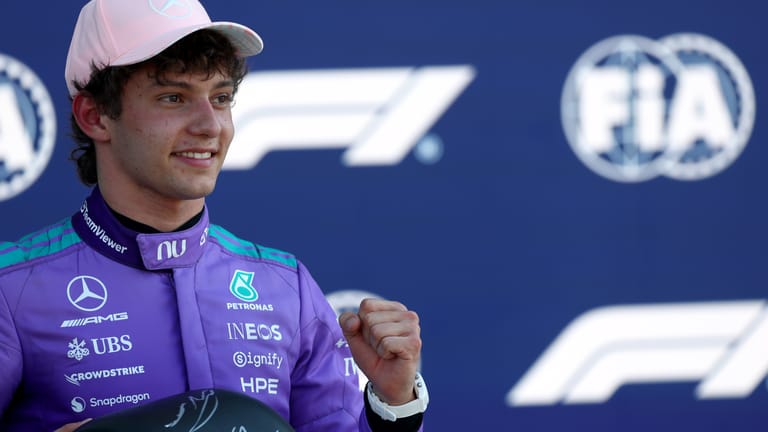
Three races, three poles, three wins. What makes the streak notable is not just the results but the way he has had to earn them. Antonelli has not led a single race from the first corner this season. He keeps losing positions at the start and getting them back through pace and strategy.
In Miami, Leclerc jumped him off the line and Norris took the lead during the first stint. Antonelli was running second when Mercedes made the call to pit. He executed the undercut perfectly, cleared Verstappen on old tyres immediately after, and then kept Norris at arm's length for the remaining 25 laps.
Toto Wolff called it his best race so far. It is hard to argue. The 19-year-old now leads the championship on 100 points, 20 clear of Russell, and is the first driver in history to win his first three grands prix from pole position.
Ferrari's engine problem is getting louder
Leclerc led the opening laps and looked competitive until the safety car reset the field. After that, Ferrari faded. By the second stint, both cars were losing time on the straights and struggling with rear tyre temperatures.
Fred Vasseur described Hamilton's race as "survival," and the data backs that up. Hamilton took first-lap damage from contact with Colapinto, then spent the rest of the afternoon managing engine temperatures, told repeatedly by his engineer to lift and coast and avoid dropping below third gear through certain corners. He finished seventh on the road, promoted to sixth by Leclerc's penalty.
The broader concern is not one bad weekend. Hamilton reported identical power problems at Suzuka five weeks ago. Ferrari brought a software update for Miami's energy management system that was supposed to address the issue. According to The Race's analysis, it did not work as intended. Leclerc's best lap was six tenths slower than Antonelli's, and paddock rumours suggest Ferrari may be down as much as 30 horsepower on internal combustion output compared to Mercedes.
Ferrari can build a chassis. That has been clear since Australia. But the power unit deficit is real, and it is costing them races they should be fighting in.
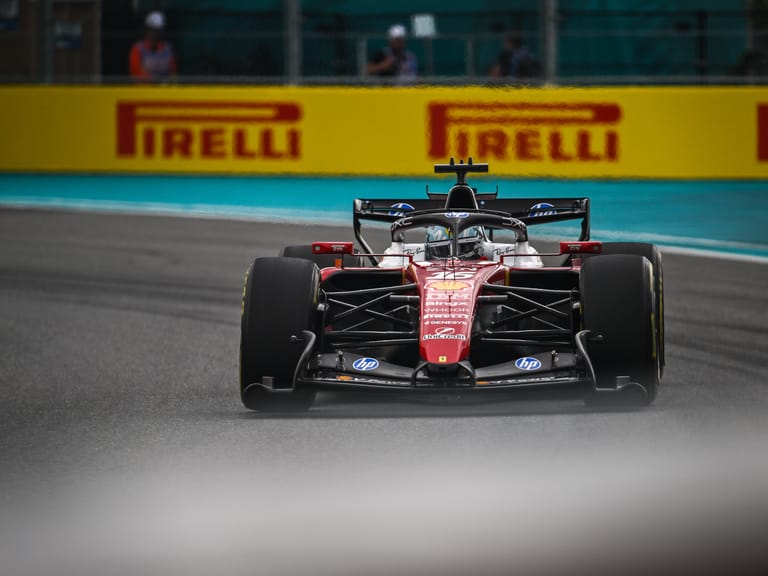
Photo by: Ferrari
Why Leclerc received a 20-second penalty in Miami
Leclerc was running third and fighting Piastri for a potential podium when he lost the rear through Turns 2 and 3 on the final lap. He hit the wall with the left side of the car and suffered suspension damage that left him unable to turn properly to the right.
Rather than park the car, he continued to the finish. In doing so, he cut several corners: the inside of Turns 8 and 11, the Turn 14/15 chicane. The stewards judged that repeatedly leaving the track without a justifiable reason gave him a lasting advantage, and handed him a 20-second penalty in lieu of a drivethrough. That dropped him from fifth to eighth.
Leclerc argued the damage made it impossible to take the normal racing line. The stewards acknowledged his car had a mechanical issue but ruled it did not meet the threshold for an unsafe condition, and the corner-cutting was not justified. It is a harsh call on a driver trying to bring a damaged car home on the last lap, but the regulations do not leave much room for interpretation.
Verstappen also picked up a five-second penalty for crossing the white line at pit exit, though it did not change his finishing position.
What happened in the Gasly and Lawson crash at Turn 17
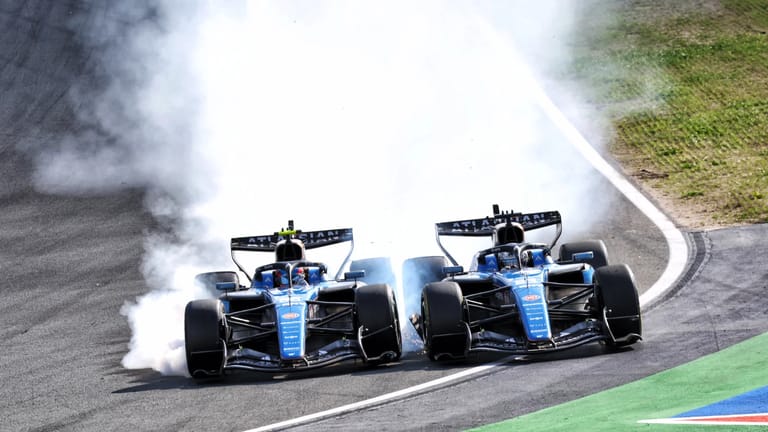
The most dramatic incident of the race came early. Lawson hit the back of Gasly's Alpine at Turn 17, flipping the car upside down and into the barriers. Gasly was unhurt but out of the race. The crash brought out the safety car that reshuffled the field.
It looked, initially, like a straightforward rear-end collision. But the stewards found that Lawson's gearbox had failed just before the contact, leaving him without the ability to slow the car properly. He was absolved of blame and will carry no penalty into Canada.
For Gasly, it was an unfortunate end to a weekend where Alpine had both cars in Q3 for the first time since Spain 2024.
Colapinto's career-best finish and what it means for Alpine
Franco Colapinto finished seventh after Leclerc's penalty, his best result in Formula 1. He had been competitive all weekend: both Alpines made Q3, and Colapinto outqualified Gasly in both sprint qualifying and the main session despite running without the new rear wing that his team-mate had.
What stood out was the consistency. He managed his tyres well, ran as high as fourth during the pit window, and pulled clear of the cars behind him in the final stint. Flavio Briatore challenged him afterwards to deliver the same level every weekend.
Colapinto described it as his most complete F1 weekend. Alpine now sits fifth in the constructors' standings, and the upgrades they brought to Miami appear to have given them a genuine step forward.
Where the 2026 championship stands after four races
The picture is becoming clearer. Mercedes has the fastest car and the most consistent driver. Antonelli leads the championship on 100 points. Russell is second on 80. Leclerc holds third with 59, but Norris and Hamilton are tied on 51 and closing.
In the constructors' standings, Mercedes leads with 180 points, 70 ahead of Ferrari. McLaren is third, a further 16 back, but their Miami upgrade makes them the team most likely to challenge Mercedes over the coming rounds.
Williams scored with both cars for the first time this season, Sainz ninth and Albon tenth. At the other end, Cadillac, Audi and Aston Martin are still searching for points. Honda's reliability problems have left Aston Martin without a finish in four races, a situation we covered in detail earlier this season.
The next round is the Canadian Grand Prix on May 24th at the Circuit Gilles Villeneuve. McLaren will arrive knowing they can beat Mercedes. Whether they can actually do it will depend on the same small margins that decided Miami.