After three days of testing in Bahrain, I can report the following with absolute confidence: nobody has any idea who is fastest, and everybody wants you to believe it's somebody else.
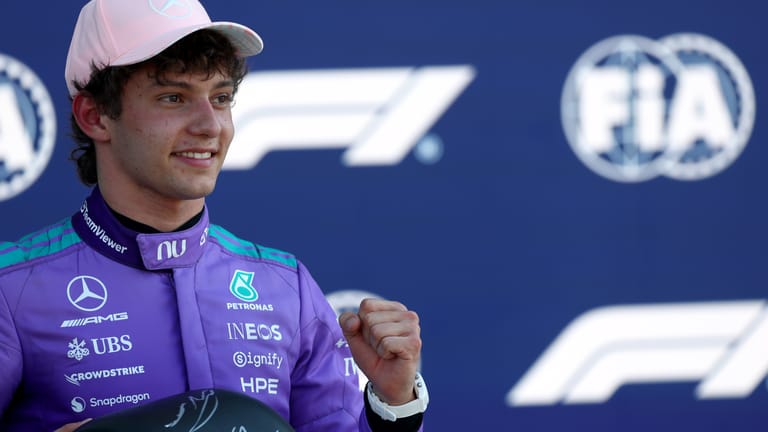
Mercedes topped the timesheets on Day 3, with Kimi Antonelli posting the fastest lap of the entire first test, a 1:33.669, to lead a Silver Arrows one-two ahead of teammate George Russell. It was a day of redemption for the young Italian, who'd managed just 33 laps across the opening two days thanks to a suspension issue and a power unit failure.
And yet.
George Russell, the man whose team just locked out the top two positions, described Red Bull's pace as "scary" and said the test had been "a reality check for all of us."
Charles Leclerc, whose Ferrari clocked the most cumulative laps of any team across three days, warned that Mercedes are "hiding a massive amount" of performance.
Red Bull's Pierre Wache, meanwhile, insisted his team is fourth fastest behind Mercedes, McLaren and Ferrari.
Welcome to F1 2026's first great game of bluff.
The sandbagging Cold War
This is nothing new, of course. Pre-season testing has always involved a degree of gamesmanship. But what struck me about the closing day of this first Bahrain test is the sheer scale of the mutual misdirection, and the fact that the new regulations have handed teams an unprecedented number of tools to disguise their true pace.
Leclerc put it neatly. In previous years, he said, there were perhaps two or three variables a team could adjust to mask performance: fuel load, engine mode, tyre compound. Now, with the complex electrical energy management at the heart of these 2026 power units, there could be ten or fifteen.
Think about what that means. The battery deployment strategy, the harvesting intensity, the split between electrical and combustion power at any given point on the circuit, all of these can be dialled up or down in ways that are almost impossible for rivals to unpick from GPS traces or timing screens alone.
Verstappen, who had already labelled these cars "anti-racing" and "Formula E on steroids" on Day 2, put it even more bluntly. He told Dutch media he believes Mercedes are concealing something in the region of a 20 horsepower advantage, and that the full picture won't emerge until Melbourne. Russell's response, when this was relayed to him, was a wry smile and the admission that he hoped they had "a big ace up our sleeve."
Antonelli's quiet redemption
For all the political intrigue, there was genuine on-track substance to Friday's running.
Antonelli's day was exactly what Mercedes needed. After a torrid opening to the test where mechanical gremlins left him watching from the garage while Russell and the rest of the grid piled up laps, most notably Verstappen's remarkable 136-lap Day 1, the 19-year-old finally got a clean run in the afternoon.
He didn't waste it. Taking over from Russell after the morning session, Antonelli was immediately on the pace, improving his benchmark twice before settling on that 1:33.669. It was a quarter of a second quicker than Russell's morning effort and over half a second clear of the nearest non-Mercedes runner, Lewis Hamilton.
Crucially, it wasn't just the headline time. Antonelli's consistency across his 61 laps suggested a driver finding his rhythm with the car rather than chasing a single glory run. Given the reliability nightmares that had defined his test up to that point, this was a significant morale boost heading into next week.
Still, Mercedes' trackside chief Andrew Shovlin struck a cautious note, admitting the team spent longer in the garage than they would have liked and that the W17 has been harder to keep in its operating window in Bahrain's warmth compared to Barcelona's cooler conditions.
The team's cumulative lap count of 282 across three days tells its own story. Only Aston Martin completed fewer.
Hamilton's marathon, and the late red flag mystery
While the sandbagging debate raged in the press pen, Lewis Hamilton did what Lewis Hamilton has always done best: put his head down and worked.
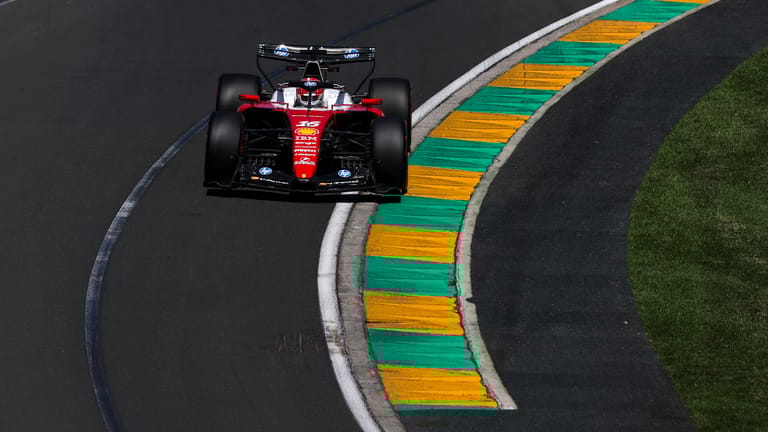
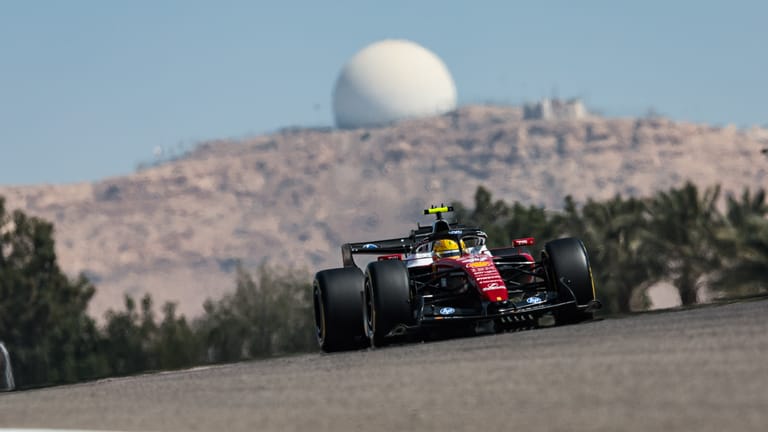
His 150-lap day at the wheel of the Ferrari SF-26 was the second highest total of the day, and it represented a comprehensive programme. He ran soft tyres in the morning to compare car configurations, then switched to hards for a full race simulation in the afternoon.
Across those long stints, he consistently looked to have the legs on the likes of Piastri and Antonelli.
Then, with ten minutes left on the clock, he pulled off at Turn 8 with his hazard lights flashing. Red flag.
The immediate speculation was of a mechanical failure, Ferrari's first significant stoppage of the test. But the reality appears to be more mundane: a deliberate run-to-empty fuel test, designed to calibrate the car's fuel sensors under extreme conditions. It's an entirely routine procedure in pre-season testing, if an awkward one to perform under the eyes of the world.
Ferrari's silence on the matter only fuelled the rumour mill, but anyone who's spent time in the paddock during testing knows these fuel system calibration runs are standard practice.
The more interesting takeaway from Hamilton's day was the race pace. Reports from Autosport's live coverage suggested the seven-time champion had a consistent edge over his direct competitors during high-fuel stints, which aligns with what Leclerc showed on his strong Thursday afternoon.
The Scuderia have been running a baseline Spec-A car throughout Barcelona and Bahrain, with a significant upgrade package expected for next week's second test. If they're already competitive on this specification, the Melbourne picture could be very interesting.
Piastri grinds it out
Oscar Piastri doesn't generate headlines in the same way as Verstappen's press conferences or Antonelli's pace. What he generates is laps.
His 161-lap day was the single biggest individual total of the entire test week. That's close to three full Bahrain Grand Prix distances in a single eight-hour session. The Australian's neck muscles will have had a thorough workout.
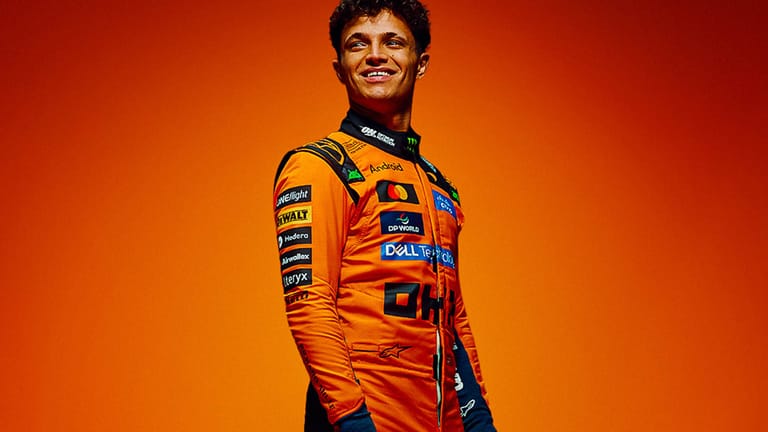
McLaren's approach to this test has been unmistakably conservative. Piastri's fastest time of 1:34.549 left him eight tenths off Antonelli, but nobody in the paddock is taking that at face value. The reigning constructors' champions have been running heavy fuel loads and keeping their engine modes well within reserve. If the sandbagging war has a quiet winner, it might be the team that hasn't bothered engaging with it at all.
Red Bull: impressive power unit, questions over chassis
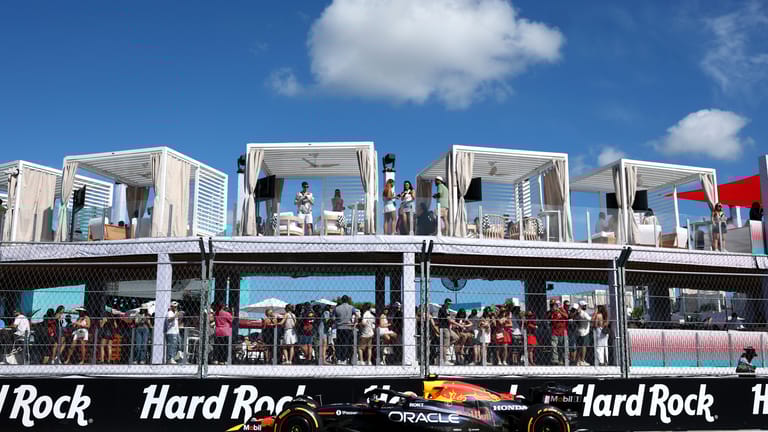
Red Bull split their final day between Verstappen in the morning and Hadjar in the afternoon, completing 120 laps between them. Verstappen was fifth fastest with a 1:35.341, over 1.6 seconds off Antonelli, though fuel loads and engine modes make that gap meaningless.
The more revealing comment came from Wache after the session. As Motorsport.com reported, the technical director's assessment of his own team's standing was strikingly candid, placing Red Bull fourth behind Mercedes, Ferrari and McLaren. He also acknowledged that while the Red Bull Ford power unit has run reliably and impressively across three days, the chassis still needs work to extract more from it.
That assessment directly contradicts what every other team has been saying. Russell, Norris, Sainz, and now Leclerc have all pointed to Red Bull's energy deployment as the class of the field. The gap on the straights, visible even on basic GPS data, has been the subject of intense scrutiny all week.
Either Wache is being remarkably honest, or he's playing the same game as everyone else. Given the quality of the Red Bull Ford power unit's debut, with 670 combined laps across the Red Bull and Racing Bulls without a significant failure, I suspect there's an element of both.
The rest of the grid
Elsewhere, the final day brought a mixture of progress and persistent headaches.
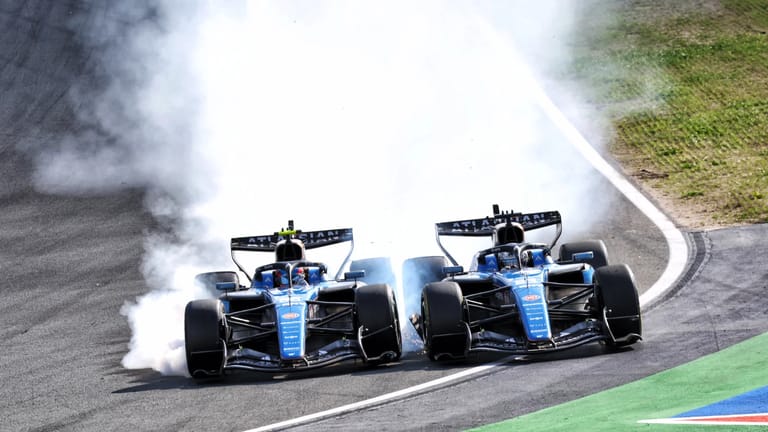
Alpine's Franco Colapinto had a strong 144-lap day and was eighth fastest, a major turnaround after the A526 had stopped on track in each of the first two days. His session ended with a bizarre moment during practice starts when he nearly crashed his car into the pit wall doing burnouts on the grid, which at least provided a moment of comic relief.
Cadillac's reliability woes continued. Bottas stopped after just eight laps with a cooling issue, the third consecutive day the new team caused a red flag. Perez salvaged the afternoon with 67 laps, but the pattern is concerning.
Three hundred and twenty laps across three days is a reasonable total for a first-year team, but the regularity of the stoppages suggests underlying fragility.
Aston Martin managed 72 laps through Stroll and ended the test as the team with both the lowest mileage (206 laps total) and the biggest performance deficit (over four seconds off). Pedro de la Rosa acknowledged they are "behind schedule," which feels like an understatement.
Adrian Newey's influence on the AMR26 won't be fully felt until later in the development cycle, but the starting point is bleak.
Liam Lawson quietly racked up 119 laps for Racing Bulls, and Audi's Hulkenberg and Bortoleto combined for 118, both teams going about their business without drama.
Lap count by team
|
Team |
Day 1 |
Day 2 |
Day 3 |
Total |
|---|---|---|---|---|
|
McLaren |
112 |
149 |
161 |
422 |
|
Williams |
145 |
131 |
146 |
422 |
|
Ferrari |
132 |
139 |
150 |
421 |
|
Haas |
115 |
130 |
145 |
390 |
|
Audi |
122 |
114 |
118 |
354 |
|
Red Bull |
136 |
87 |
120 |
343 |
|
Racing Bulls |
75 |
133 |
119 |
327 |
|
Cadillac |
107 |
109 |
104 |
320 |
|
Alpine |
77 |
97 |
144 |
318 |
|
Mercedes |
86 |
57 |
139 |
282 |
|
Aston Martin |
36 |
95 |
75 |
206 |
Williams matching McLaren at the top of the mileage charts is remarkable given they missed the Barcelona shakedown entirely. Mercedes' relatively low total reflects those two difficult opening days, though Friday's 139 laps showed the Silver Arrows can run at full capacity when the car cooperates.
So who actually won this test?
That, ultimately, is the question everyone is asking, and the answer is genuinely unknowable at this stage.
If you go by pure lap times, Mercedes look formidable. If you listen to the paddock consensus, Red Bull's power unit is the standout package. If you study the race simulation data, Ferrari's consistency has been quietly impressive across all three days. And if you value sheer preparation and mileage, McLaren and Williams have done more running than anyone.
What I can say is this: the new energy management regulations have turned the traditional testing pecking order guessing game into something far more complex. In previous eras, you could fuel-correct the times and get within a few tenths of the truth. Now, with so many electrical variables in play, the margin for error in any estimate is enormous.
The four-way fight between Mercedes, Ferrari, McLaren and Red Bull looks real. How they stack up against each other is a question that won't be answered until qualifying in Melbourne on March 7. And even then, I suspect it'll take a few races before the picture truly settles.
Five more days of testing remain before the season begins. Next week's second Bahrain test, starting Wednesday, will see Ferrari bring their race-spec upgrade package and teams start to push closer to their true performance limits. The sandbagging will thin out. The truth will start to emerge.
For now, everyone is still bluffing. The question is who's holding the best hand.