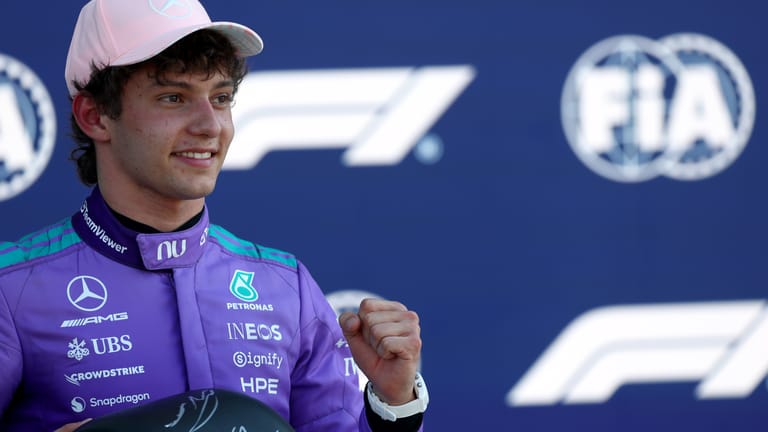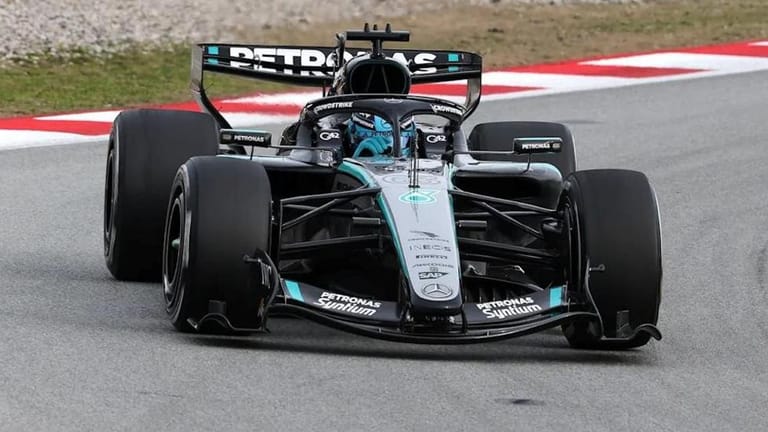
Mercedes emerged from Formula 1's first 2026 pre-season test as the standout performer, completing 502 laps across three days at the Circuit de Barcelona-Catalunya and demonstrating the kind of reliability that has rivals taking note.
The Brackley-based team accumulated over 2,300 kilometres of running between drivers George Russell and Kimi Antonelli, a distance equivalent to nearly eight full Grand Prix races. This figure is particularly significant given that the W17 features an entirely new chassis and power unit package under F1's most comprehensive regulation changes in the sport's modern history.
Impressive Daily Consistency
Mercedes maintained triple-digit lap counts throughout their allocated running days, with 151 laps on day one, 183 on day two, and 168 laps on their final day. This consistency allowed the team to progress rapidly through their testing programme, moving from basic systems checks to race simulations and setup exploration by the third day.
Trackside engineering director Andrew Shovlin confirmed the team had completed all planned objectives ahead of schedule. "It's been really impressive from a reliability point of view," Shovlin said. "There are all new systems on the car. It's worked brilliantly. We finished a day early, but part of that is that the car's just allowed us to run the programme day by day as we planned it."
Power Unit Performance
As a power unit manufacturer, Mercedes also led the way across all customer teams. Their engines completed over 1,000 laps in total, making them the only manufacturer to reach quadruple digits. This compares to Ferrari's approximately 1,000 laps across their factory team and customers Haas and Cadillac, leaving Mercedes with a 145-lap advantage.
The significance of this reliability cannot be understated in the context of the 2026 regulations, which require power units to deliver a 50-50 split between electrical and combustion power, necessitating complex energy management strategies.
On-Track Performance
Beyond reliability, Mercedes showed competitive pace throughout the test. Russell posted what stood as the second-fastest time of the entire week, a 1:16.445, before Lewis Hamilton's Ferrari marginally bettered it on the final day with a 1:16.348. Both Russell and Antonelli claimed fastest times on individual days during their running.
However, Russell cautioned against reading too much into lap times at this stage. "The car has been working well, but it is not about how well it works; it is about how quickly it goes around the track, and we don't really have an indication of that at the moment," he said. "We're in a reasonably good place, but I'm sure things are going to change a lot between now and the next Bahrain test."
Ground Effect Era Comparisons
The Barcelona performance marks a notable departure from Mercedes' struggles during the 2022-2025 ground effect era, when the team managed just five race wins in four seasons and endured a winless 2023 campaign. Russell specifically highlighted the absence of porpoising, the bouncing phenomenon that plagued teams during the previous regulatory cycle.
"The car's feeling nice to drive. No major issues, no porpoising, which is pretty good news for all of us," Russell confirmed. The elimination of this issue suggests Mercedes have a clearer understanding of their aerodynamic platform under the new regulations, which have moved away from ground effect principles.
Looking Ahead to Bahrain
Shovlin indicated that the focus will shift significantly for the upcoming Bahrain tests on February 11-13 and February 18-20. "In Bahrain, we're going to move more to setup exploration, trying to work out how you get the car in the right window," he explained. "Whilst you can do setup here, it's so cold, it's not really relevant to any race track, so Bahrain is going to be a much better place."
The cold conditions in Barcelona, with track temperatures well below what teams will encounter during the racing season, mean that tire performance and aerodynamic behavior observed in Spain may not translate directly to race conditions.
Paddock Reaction
Multiple paddock sources have suggested Mercedes appears to have made the strongest start to the new era. Sky F1 pundit Martin Brundle noted that the team "look like they've aced this completely different set of regulations," though he added the caveat that real performance will only be clear at normal track temperatures.
There have also been reports of Mercedes potentially exploiting a loophole in the power unit regulations related to compression ratios, which could provide a performance advantage estimated at three tenths of a second per lap. However, these remain unconfirmed and will likely face scrutiny from rival teams.
With the Australian Grand Prix season opener scheduled for March 6-8 in Melbourne, Mercedes has given itself the optimal platform for development, having gathered extensive data while demonstrating both reliability and competitive pace in the opening phase of pre-season testing.