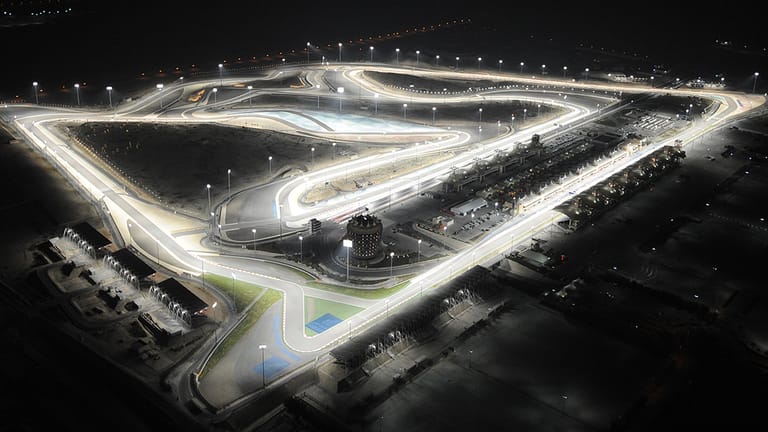
Pirelli's wet-weather tyre test in Bahrain has been called off after Iranian missile strikes hit the Gulf state, forcing F1 personnel to scramble for alternative routes to Melbourne and casting a shadow over two April races before the season has even begun.
The strikes came in retaliation to joint US and Israeli military action against Iran, which US President Donald Trump confirmed included "major combat operations." Iran's response targeted American military bases across the region. One missile struck the command centre of the US Navy's Fifth Fleet in Bahrain's Juffair district, a neighbourhood anyone who has spent time in the Bahrain paddock will know well, around 30 kilometres from the Bahrain International Circuit.
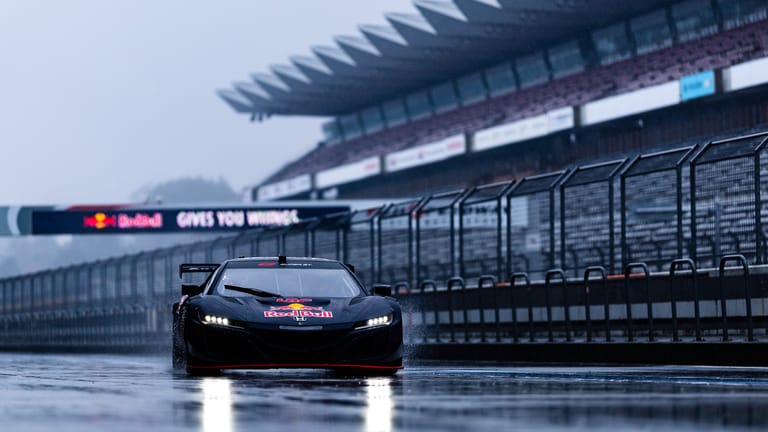
Pirelli had a two-day development session running at Sakhir, using mule cars supplied by Mercedes and McLaren to gather wet-weather data ahead of the new regulations. It was cancelled immediately.
In a statement, Pirelli confirmed all personnel on site were safe in their hotels and working to get them home to Italy and the UK as quickly as possible.
Melbourne not affected, but the journey there is
F1 was quick to point out that the Australian Grand Prix, which gets the 2026 season underway on March 8, remains unaffected. The official line from Formula One Management was measured, if a little practiced:
– Our next three races are in Australia, China and Japan, not in the Middle East. Those races are not for a number of weeks. As always, we closely monitor any situation like this and work closely with relevant authorities.
Technically accurate. But for roughly 2,000 people who make up F1's travelling circus, the Middle East is not just where two races are held. It is a major transit hub. Dubai and Doha handle a significant chunk of the intercontinental connections between Europe and Australia. With airspace closures across parts of the Gulf, those routes are gone.
Paddock staff and freight are now rerouting through Hong Kong and Singapore. Others are flying to Perth first, then connecting domestically across to Melbourne. It is logistically messy and expensive, and it comes at the worst possible moment. Days before a race week.
The race itself will happen. Getting there is the immediate headache.
April is the real question
Bahrain hosts round four on April 12. Saudi Arabia is a week later, on April 19. Both are currently on the calendar. Neither has been officially threatened with postponement or cancellation. F1 is understood to have contingency plans in place, but nobody is publicly invoking them yet.
Six weeks is a long time. If the conflict escalates further, or airspace remains restricted, the decisions will get harder. If things stabilise, as they have tended to do in this region, both races may well go ahead.
The honest answer is that nobody knows, and anyone claiming otherwise is speculating.
We have been here before
The most direct precedent is the 2022 Saudi Arabian Grand Prix. During first practice at the Jeddah Corniche Circuit, a Houthi missile struck an Aramco oil depot around 16 kilometres from the track. The smoke was visible from the pitlane.
What followed was one of the more extraordinary nights in modern F1 history. Drivers, team principals and F1 officials sat in meetings that stretched past 4am local time. There were genuine discussions about a boycott. Hamilton, Sainz and Gasly were among those most vocal about their concerns. The GPDA later acknowledged that drivers had "natural human concerns" on seeing the smoke, and that it had been difficult to remain focused.
The outcome was that everyone raced. Saudi government ministers attended the paddock meetings and gave personal assurances that security had been raised to the maximum. Stefano Domenicali told reporters they had received "total assurance that the country's safety is first." Toto Wolff, with the air of a man who had chosen his words carefully, said the circuit was "probably the safest place you can be in Saudi Arabia at the moment."
Verstappen won the race. The Houthis announced a ceasefire the following morning.
It was not F1's finest hour in terms of how it managed the situation, but the sport made its choice and the weekend passed without further incident. That precedent of pressing on, accepting the assurances and relying on the security apparatus is now the established template.
The difference this time
What makes 2026 more complicated is the scale and nature of the conflict. In 2022, the threat came from Houthi rebels targeting Saudi infrastructure as part of an ongoing proxy war. In the current situation, the United States has begun direct military operations against Iran, and Iran has struck US military facilities on sovereign Gulf territory, including in Bahrain itself.
That is a different category of geopolitical risk. Whether it translates into a greater risk for an F1 event is another question entirely; the circuit at Sakhir is not a US military asset, and the Jeddah paddock is not a strategic target. But the context is harder to set aside.
F1 has financial commitments to both venues that run well into the next decade. It will not abandon those lightly, and the sport's default position of monitoring, consulting and continuing has served it well enough historically. The 2011 Bahrain Grand Prix is the lone example of a race being cancelled for safety reasons in the modern era, and that followed sustained domestic unrest with fatalities.
For now, the sport's eyes are on Melbourne. What happens in the Gulf over the next six weeks will determine what kind of conversations take place before April.